
Published on: 2026-10-27
In November, representatives from eight countries and several organisations and institutions will meet in Nairobi for NCEA’s East Africa Partner Conference. The conference is organised around peer-to-peer learning. Case-specific peer exchange is effective and highly appreciated, as shown by a recent review of NCEA’s activities in Uganda.
The NCEA has maintained a close partnership with Uganda for more than twenty years. The collaboration has focused on improving the effectiveness of both SEA and ESIA, since Uganda is a country with strong SEA and ESIA legislation. Significant progress has been made over the years, which has resulted in changing needs.
This year, the NCEA did a review of its work in Uganda to take stock of what needs have been met and what kind of support needs to be adapted. Over a period of two weeks, evaluator Sofia Marcon spoke with staff from the National Environment Management Authority (NEMA) and other government institutions and stakeholders involved in environmental assessment processes. With the review report underway, she already shares some first observations.
The first one is that Uganda is moving forward to better embed Strategic Environmental Assessment (SEA) in spatial planning. The intention is to spread responsibilities across multiple organisations rather than concentrating them within a single institution. Several ministries and government agencies are now playing an active role in SEA. As a result, SEA is evolving from a specialist topic into a shared responsibility across government. This development is creating greater ownership and a stronger foundation for the future. At the same time, there is still a need for additional capacity development so that more organisations can participate effectively and contribute.

“We are taking strides to strengthen the Environmental Assessment System of Uganda.” – Ms Aiden Jullian Asekenye, Manager of Environmental Assessment at NEMA
Another interesting observation from the review is that SEA and collaboration often seem to go hand in hand in planning and decision-making processes in Uganda. Policymakers with experience in SEA are more likely to reach out to other ministries. Conversely, people who naturally work across organisational boundaries often use SEA as a tool to bring stakeholders together. In an environment where ministries are typically focused on their own mandates, SEA helps create space for discussions about shared challenges. Establishing the first connection can still be difficult, as hierarchy, budgets, and organisational cultures are not always designed to support collaboration. However, once that initial hurdle has been overcome, interministerial cooperation is often viewed positively by those involved.
Lastly, the review made clear which types of support are most valued in Uganda. It turned out that, besides its technical expertise, the NCEA is appreciated for sharing practical examples and lessons from elsewhere. Marcon: “Ugandan partners repeatedly mentioned how useful it is to hear what has worked in other countries and which approaches have been less successful. Examples from the Netherlands and other countries facing similar challenges are particularly appreciated. It is a reminder that sharing practical experiences often has a greater impact than simply explaining how a system should work in theory.”
Putting review results into practice
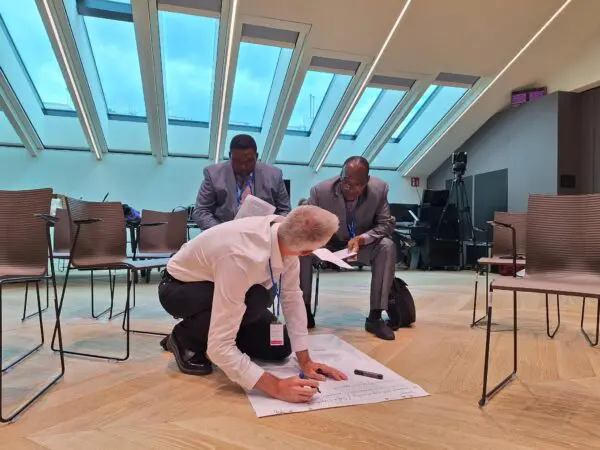
Encouraged by these and other findings, the NCEA is already expanding its efforts to facilitate peer learning exchange between countries and sectors, for example in Vienna in September, at a conference organised by OPEC and the African Development Bank.
Another occasion for peer learning will be the upcoming Partner Conference in Nairobi, where Uganda will also be represented. Participants of the partner conference are all somehow involved in complex spatial issues, such as land use planning, corridor and infrastructural development, mineral resources management, or delta planning. Against the background of these cases, the participants will focus on institutional cooperation and the role of impact assessment in supporting collaboration in the planning, implementation, and monitoring stages of these trajectories. The NCEA will facilitate peer-to-peer exchange to explore what factors can truly enable stakeholder involvement, well-aligned and integrated planning, meaningful participation, and joint monitoring and enforcement.
Picture: Participants of the ‘Strengthening Environmental and Social Safeguards for African Countries’ conference, organised by the OPEC Fund for International Development and the African Development Bank in Vienna in September. ©NCEA, 2026