Anna Chadarevian
Senior Advisor Environmental and Social Assessment

Nigeria faces significant challenges related to natural resource and environmental management, alongside ongoing conflicts and security — some of which are linked to the exploitation of resources such as oil and minerals. To address these challenges, the densely populated country seeks to strengthen governance frameworks. Part of this ambition is to improve the use of Strategic Environmental and Social Assessment (SESA) in their plans, policies, coordination, and collaboration.
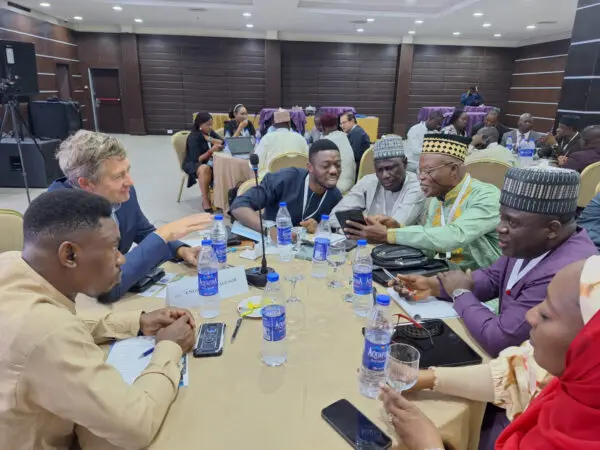
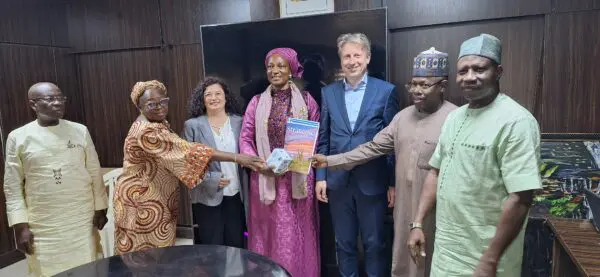
The NCEA is already providing process support to the Federal Ministry of Power and Federal Ministry of Water Resources and Sanitation on the SPIN Hydropower Strategic Environmental and Social Assessment (SESA) programme. At the start of this process, an interministerial agreement was established, recognising the need for SESA. To identify ways to further support the Nigerian government in the process of strengthening their Environmental and Social Impact Assessment (ESIA) and SESA systems, the NCEA visited Abuja to meet with key stakeholders, establish direct contacts, and gain a better understanding of the opportunities and challenges within the Nigerian environmental assessment context.
Discussions during the visit highlighted the important role that ESIA and SESA can play in addressing Nigeria’s development challenges. Strengthening governance, improving regulations to protect national interests, promoting meaningful stakeholder engagement, supporting sustainable development-driven policies, and fostering interministerial cooperation, can help ensure that large-scale investment projects contribute to economic development while safeguarding the country’s natural resources.
During the visit, the NCEA engaged with several governmental institutions and its agencies, including the Federal Ministry of Environment, the Ministry of Solid Minerals Development, the Ministry of Power, and the Ministry of Agriculture and Food Security. Meetings were also held with professional associations, civil society organisations, and international financial institutions such as the African Development Bank.
These exchanges provided valuable insights into the current dynamics, needs, and opportunities related to ESIA systems and SESA processes in Nigeria. Together with the Nigerian ministries and partner institutions involved, the NCEA will examine the possibilities for a future role in facilitating dialogue and cooperation between institutions, with the aim of fostering stronger collaboration and more coordinated action in relation to strategic planning. Also, opportunities will be explored to organise training sessions and joint activities focused on strengthening institutional capacity, stakeholder engagement, and awareness of SEA systems in Nigeria. Particular attention will be given to supporting the implementation of the SPIN Hydropower SESA programme and promoting good environmental governance practices more broadly.
Picture: ©NCEA, 2026
Senior Advisor Environmental and Social Assessment
The Ministry of Energy has asked NCEA's support on a SESA for their Master Plan for Hydropower development.